ProRun ·
Race Report: Koki Sato - Kobe Marathon 2026
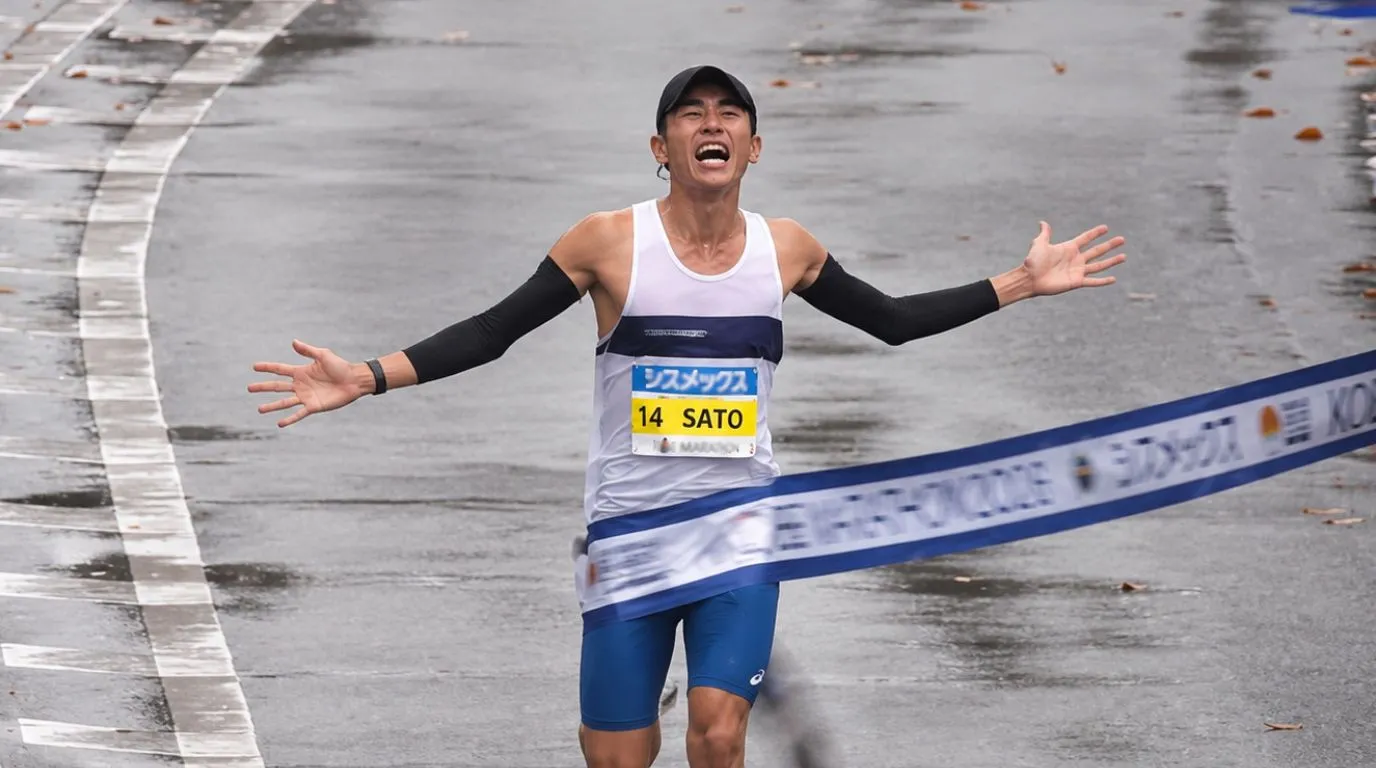
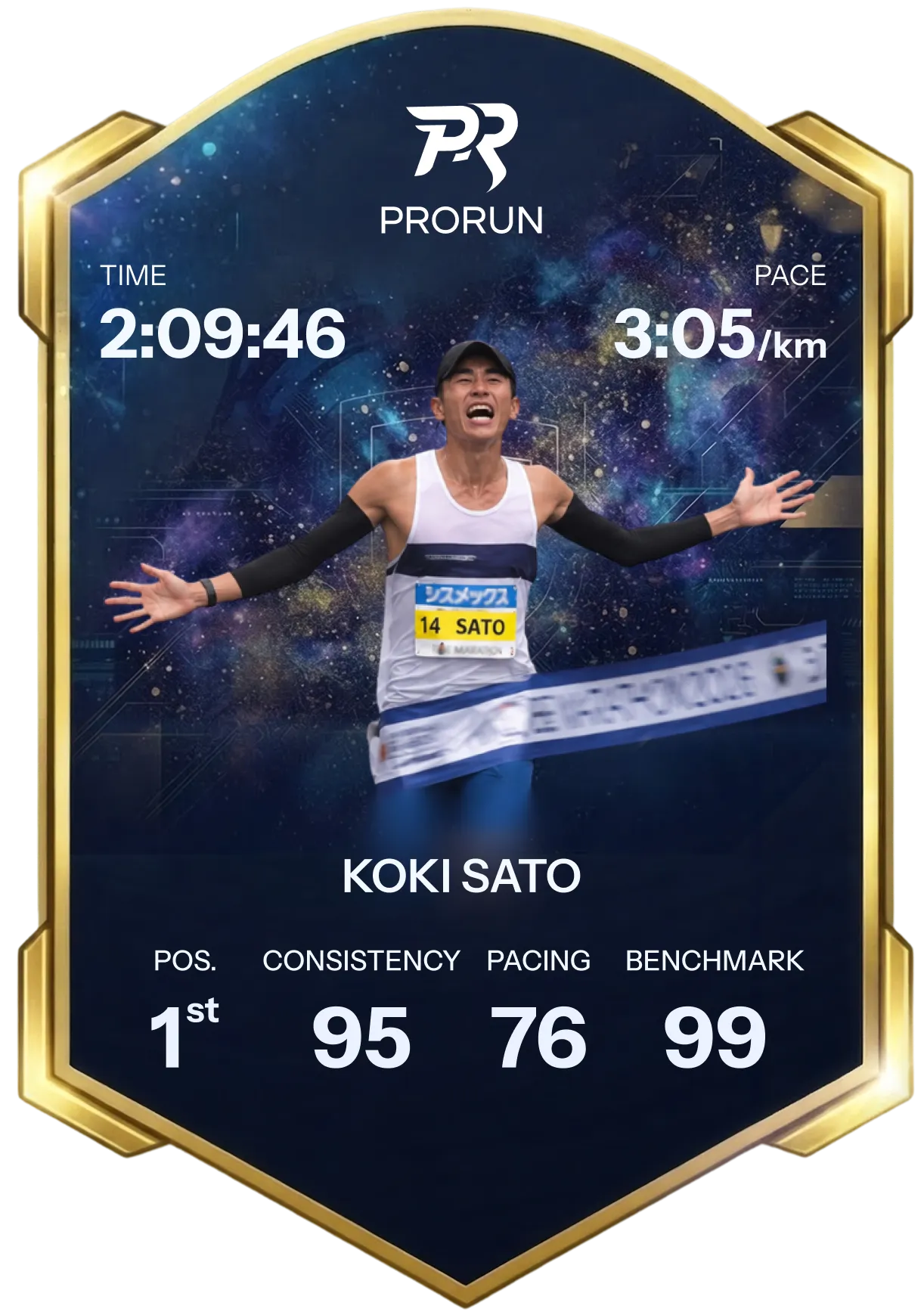
Under the rain in Kobe, Koki Sato delivered a performance destined to go down in Japanese marathon history. Winning the 2026 Kobe Marathon in 2h 09m 46s, the 25-year-old from Asahi Kasei set a NEW PERSONAL BEST, improving his previous time by 1 minute and 21 seconds and breaking the 2-hour and 10-minute barrier for the first time. It was a success built on precision, courage, and a memorable comeback in the final kilometers.
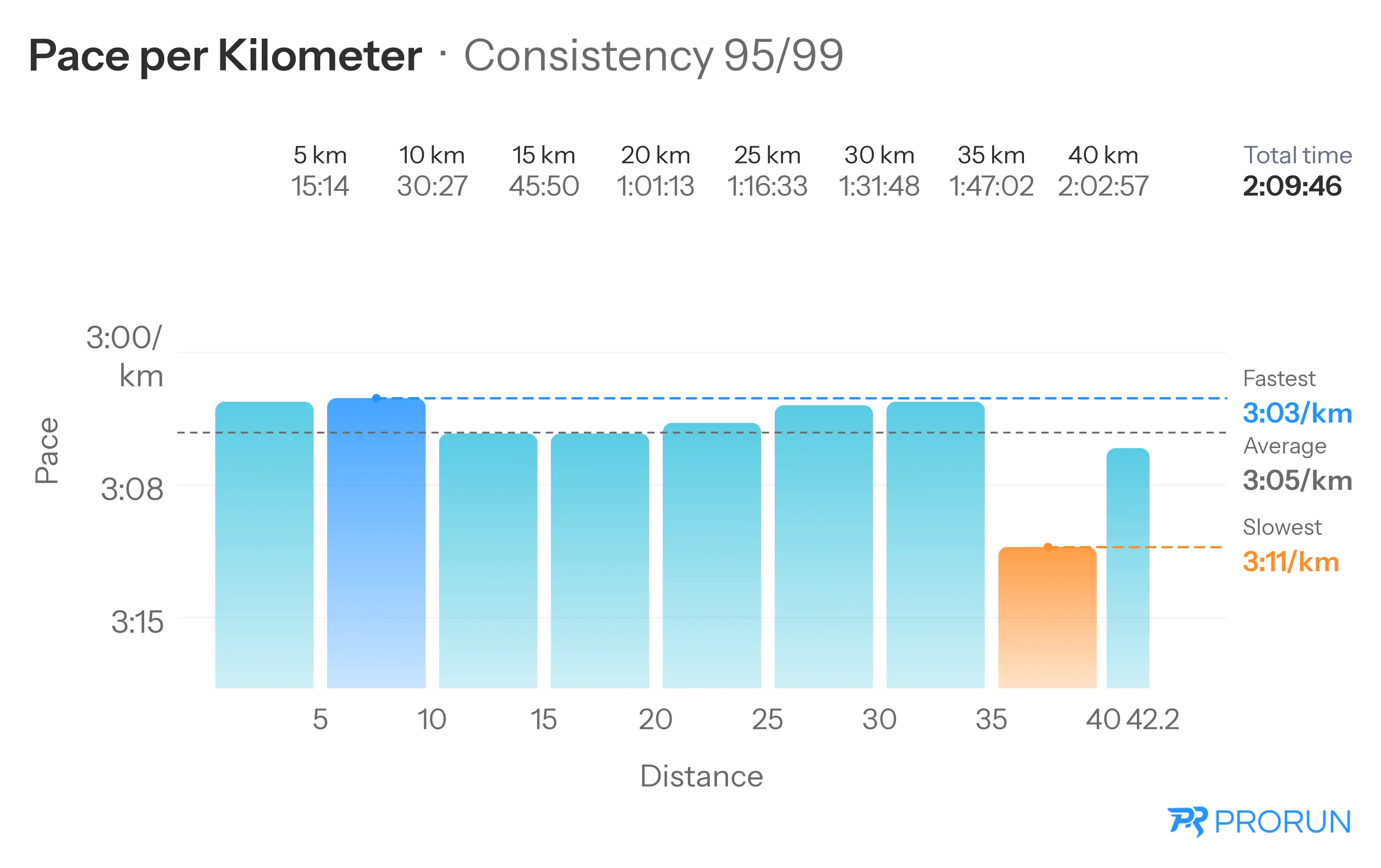
Consistency — 95/99 (excellent)
The near-perfect score reflects a performance of extraordinary steadiness. In a marathon run on wet asphalt, Sato distributed his effort metronomically, avoiding fluctuations that could compromise efficiency or prematurely drain his energy.
At the elite level, a Consistency score of 95/99 indicates more than just a stable pace: it signals the ability to keep intensity, mechanics, and mental clarity under control for over two hours. This very solidity allowed him to reach the 40 km mark still in a position to attack, despite trailing Kenyan Barnaba Kipkoech by 8 seconds.
The overall steadiness takes on even greater value considering the rain, which made the course less favorable. Sato didn’t waste energy chasing every tactical shift: he preserved a constant baseline of performance, turning it into the launchpad for his decisive final surge.
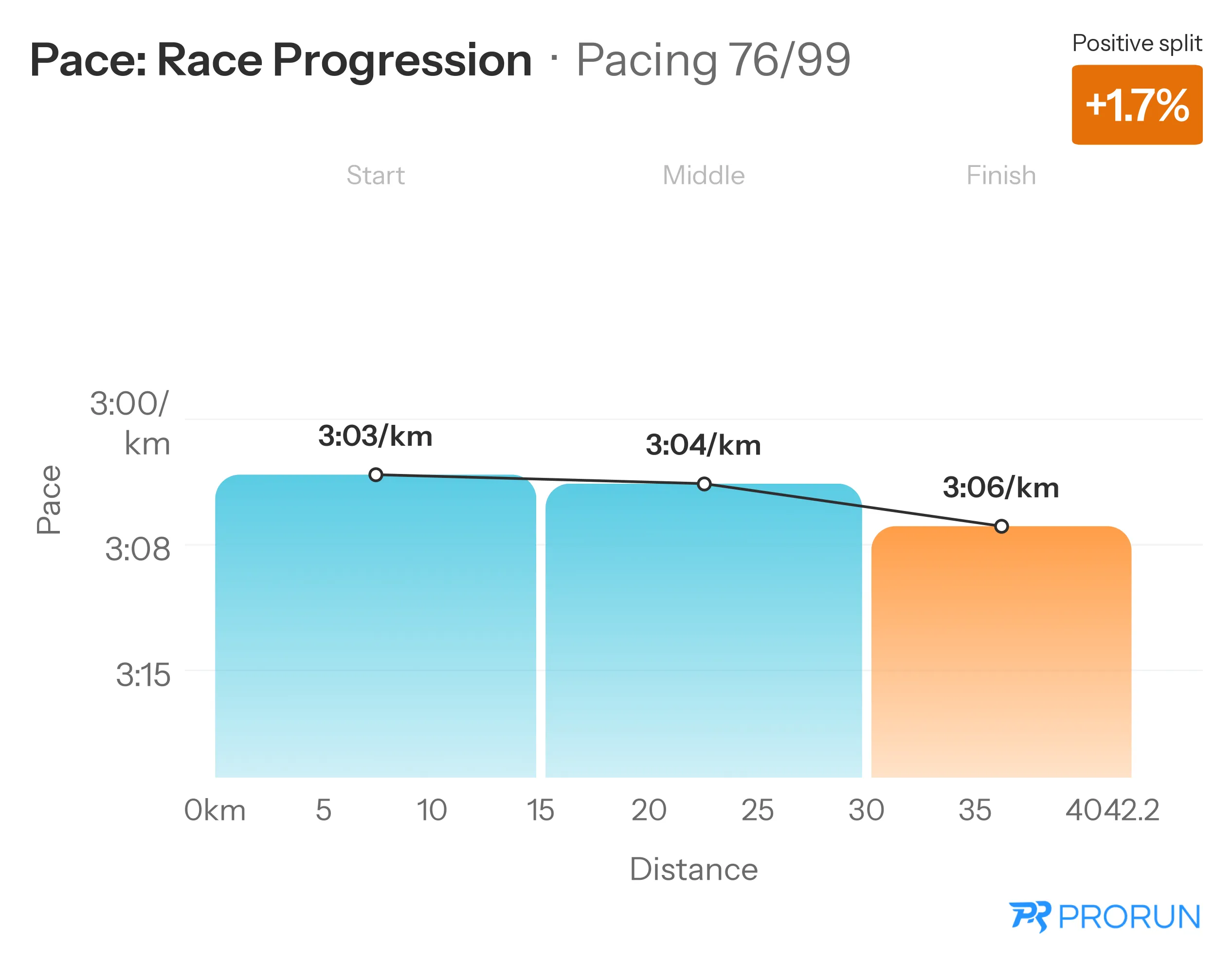
Pacing — 76/99 (mild to moderate positive split)
The pace profile shows a contained positive split: in the first 35% of the race, Sato ran at an average of 3:03 min/km, while in the final 35% the average was 3:06 min/km. The difference of just 3 seconds per kilometer indicates a real but controlled slowdown, consistent with the progressive fatigue of a top-tier marathon run in the rain.
The average metric alone, however, does not capture the full competitive storyline. With just a few kilometers to go, Kipkoech was still in the lead; at the 40 km mark, he held an eight-second advantage. In the final 2.195 km, Sato changed gears, closed the gap, executed the overtake, and built his own 8-second margin, leaving Kipkoech in second place at 2h 09m 54s.
The 76/99 score therefore reflects a second half that was, on average, slightly slower, not a collapse. On the contrary, having such a sharp final acceleration available proves the athlete had conserved a decisive reserve of energy. As he recounted after crossing the finish line, the crowd’s support allowed him to run “giving it my all without thinking about anything else.”
Benchmark — 99/99 (at or near lifetime best)
The historical comparison is unequivocal: 2h 09m 46s represents the new pinnacle of Sato’s career. His previous personal best, 2h 11m 07s, dated back to the Fukui Sakura Marathon on March 29, 2026; in Kobe, he lowered it by 81 seconds, also setting his new season best.
The performance takes on additional significance because it put a Japanese athlete back on the top step of the Kobe men’s podium for the first time since 2015. Only one detail was missing: the 2h 09m 00s standard required for a direct pass to the Marathon Grand Championship remained 46 seconds away. This does not diminish the result, but it offers a concrete target for his next performance leap.
Overall, Sato’s marathon was one of immense maturity: exceptional steadiness, prudent fatigue management, and the ability to produce the most crucial pace change at the moment of maximum pressure. The slight average slowdown in the second half leaves room for refinement, while the victory, personal best, and the shattered 2h10 barrier certify a historic day. The olive wreath presented by the mayor of Kobe fittingly celebrated a triumph built on champion-level data and sealed with the heart of a world-class athlete.