ProRun ·
Race Report: Buze Diriba - TCS Amsterdam Marathon 2026
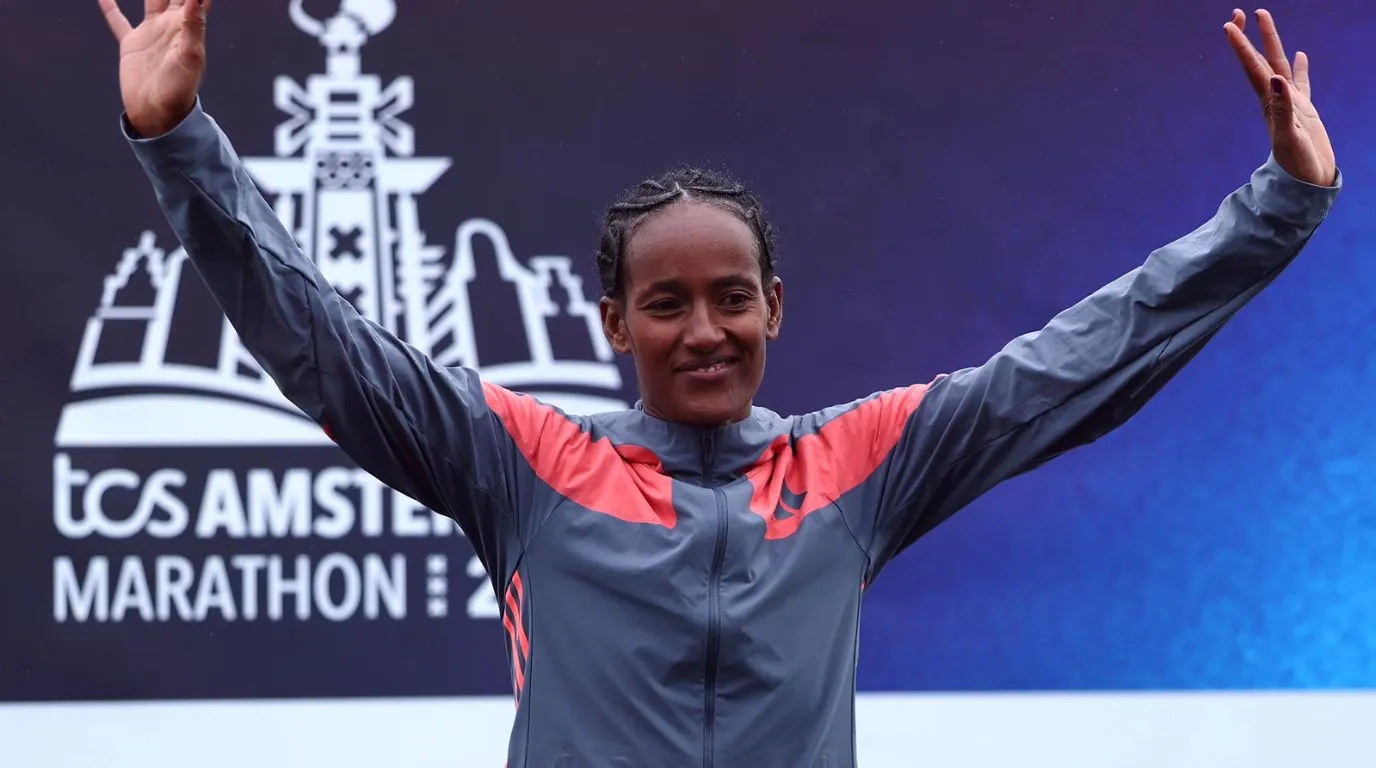
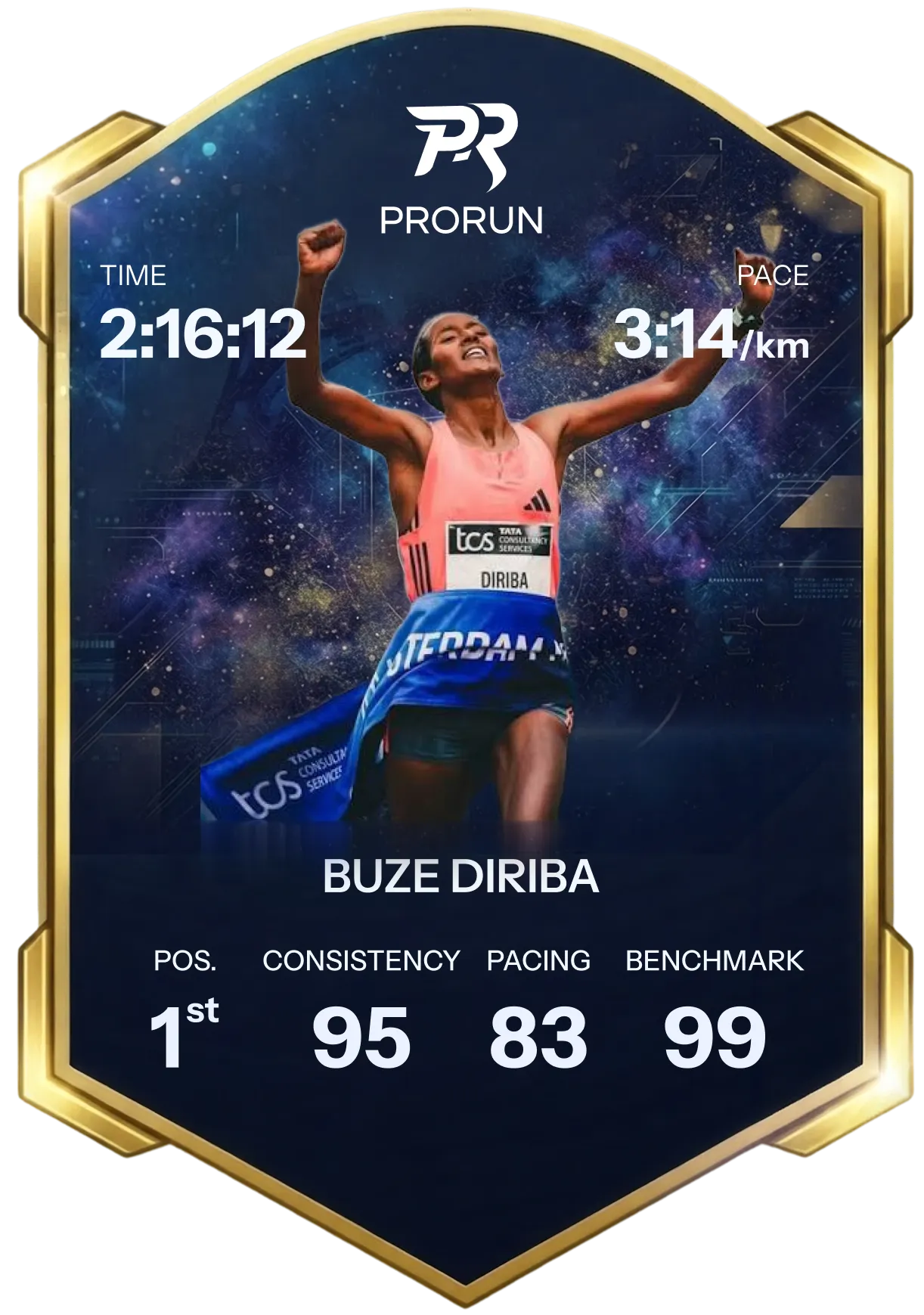
Buze Diriba turned a patient race into a historic triumph at the TCS Amsterdam Marathon 2026, winning in 2h 16m 12s and delivering a spectacular NEW PERSONAL BEST. In cold, rain, wind and slippery road conditions, the Ethiopian produced far more than a victory: she improved her lifetime best by 3m 22s, broke the Amsterdam course record by 40 seconds, and rose to 16th on the women’s marathon all-time list. It was an elite performance built on control, progression and a decisive late attack.
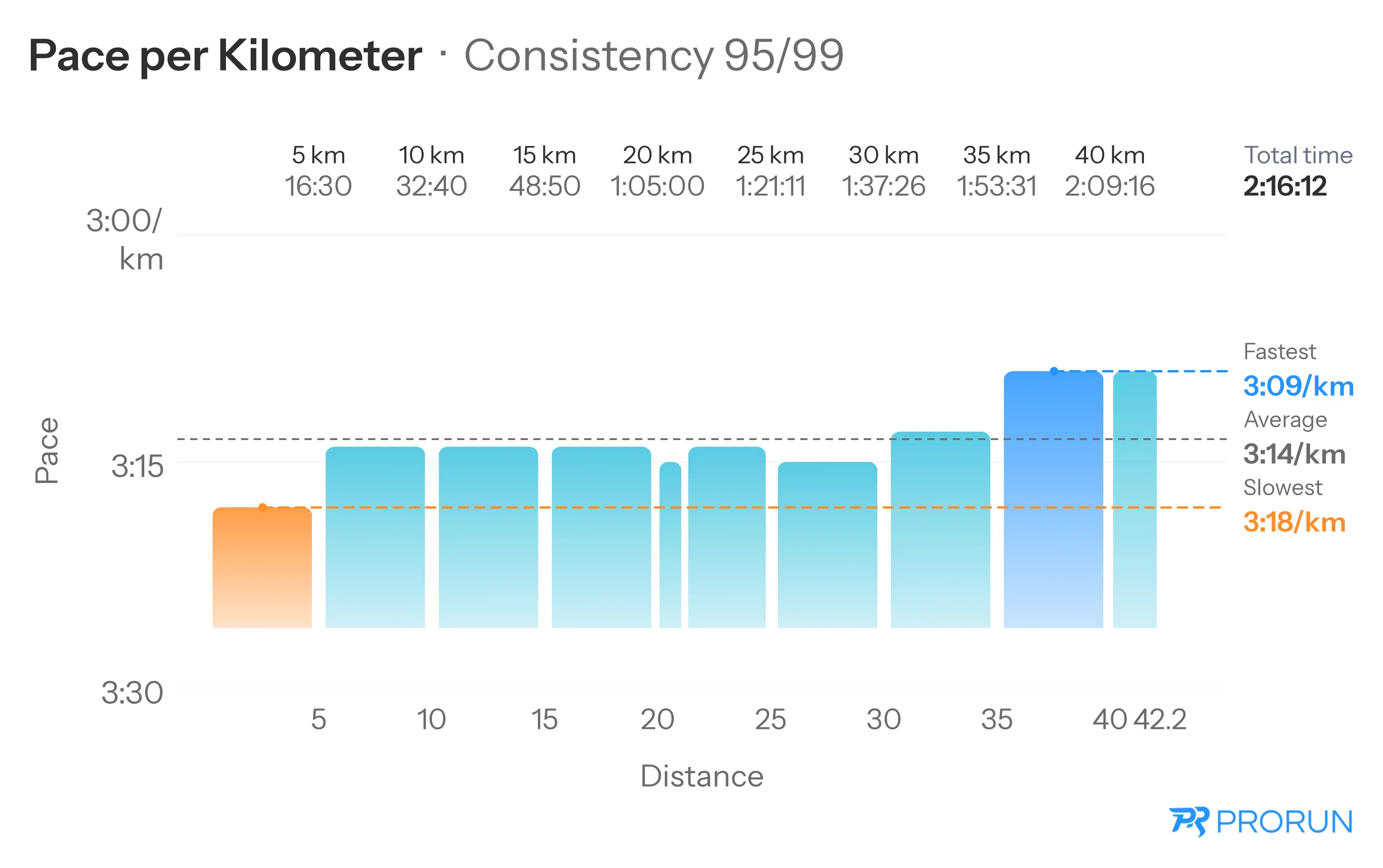
Consistency — 95/99 (excellent)
Diriba’s score reflects exceptionally stable effort across the marathon. A 95/99 is the profile of a runner operating almost metronomically, with limited unnecessary fluctuation from kilometer to kilometer. That discipline was particularly valuable on wet asphalt, where poor footing and gusting wind could easily have disrupted rhythm or encouraged costly surges.
The consistency was tactical rather than passive. Diriba remained composed within an Ethiopian lead quartet during the conservative opening phase, then adapted as the group was reduced after 30 km. Even as rivals began to fall away, she preserved enough control to keep the race efficient before increasing the pressure. At elite level, that combination—steady expenditure early and precision under fatigue — is a major competitive strength.
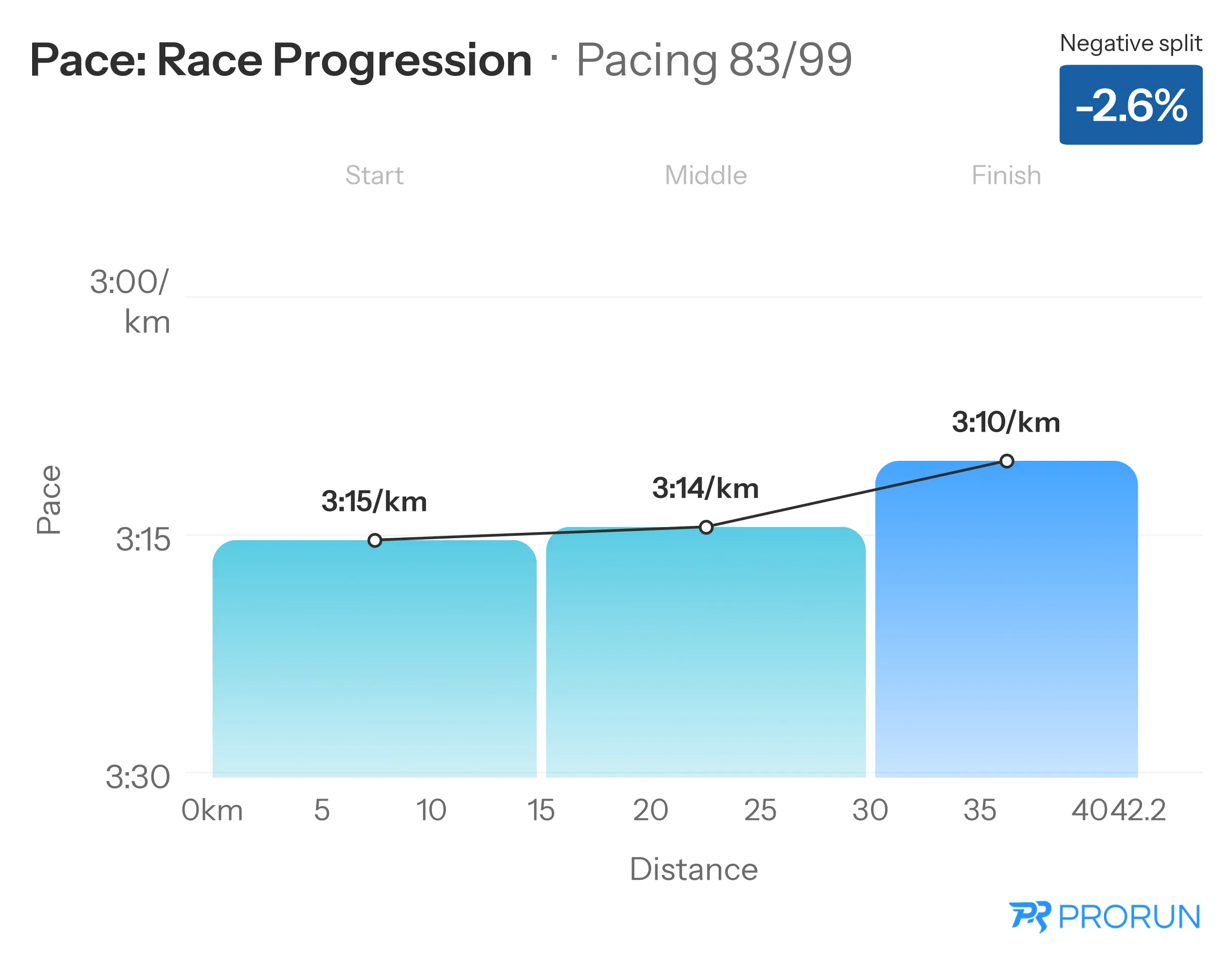
Pacing — 83/99 (flat to moderate negative split)
The 83/99 pacing score shows a well-managed progression, with Diriba becoming faster rather than fading. Her average pace improved from 3:15 min/km over the first approximately 35% of the race to 3:10 min/km over the final approximately 35%. That five-second gain per kilometer is highly significant in a marathon: it indicates that the fastest running arrived when fatigue was greatest.
The pace ratio of 0.974 confirms a negative split, meaning the later portion was faster than the earlier one. The official halfway splits make the progression even clearer: after reaching halfway in 1h 08m 34s, Diriba covered the second half in approximately 1h 07m 38s, a 56-second improvement that transformed an initially cautious contest into a record-breaking performance.
Her acceleration also matched the race’s tactical evolution:
- Shortly after 30 km, Mestawut Fikir lost contact, signaling that the controlled pressure was beginning to take effect.
- By 35 km, Diriba and defending champion Aynalem Desta had separated from Meseret Belete, leaving a two-woman contest.
- Near 40 km in Vondelpark, Diriba launched the decisive change of pace and entered the Olympic Stadium alone, ultimately winning by 54 seconds.
This was not simply a fast finish. It was a measured demonstration of dominance, with the winning move delayed until it could be made decisively.
Benchmark — 99/99 (at or near lifetime best)
The benchmark score carries the report’s defining message: NEW PERSONAL BEST. Diriba’s 2h 16m 12s demolished her previous mark of 2h 19m 34s, set when winning Frankfurt in 2025, by 3m 22s. Such a large improvement at this level represents a genuine leap in international standing rather than a marginal revision.
The performance was also a new season best, improving substantially on the 2h 19m 54s she ran in Daegu earlier in 2026. It extended her sequence to three consecutive marathons under 2h 20m, evidence that Amsterdam was the high point of an already established run of elite consistency.
Its historical value went further. Diriba lowered the previous Amsterdam and Netherlands all-comers record of 2h 16m 52s by 40 seconds, despite the adverse weather. Her winning time led an Ethiopian podium sweep, while her place among the 16 fastest women in marathon history elevated the result onto the global stage.
Taken together, the three KPIs describe a complete championship-caliber race: exceptional stability, intelligent acceleration and a career-defining benchmark. Diriba’s greatest strengths were her economical early control and her ability to produce her fastest running late, when the weather, distance and opposition were exerting maximum pressure. A slightly earlier commitment might have produced an even more aggressive negative split, but the chosen strategy delivered victory, a course record and a huge lifetime best. As Diriba said afterward, the race was hard — but Amsterdam confirmed that her ambitions now belong among the very fastest in marathon history.