ProRun ·
Race Report: Sheila Chepkirui - Valencia Half Marathon 2026
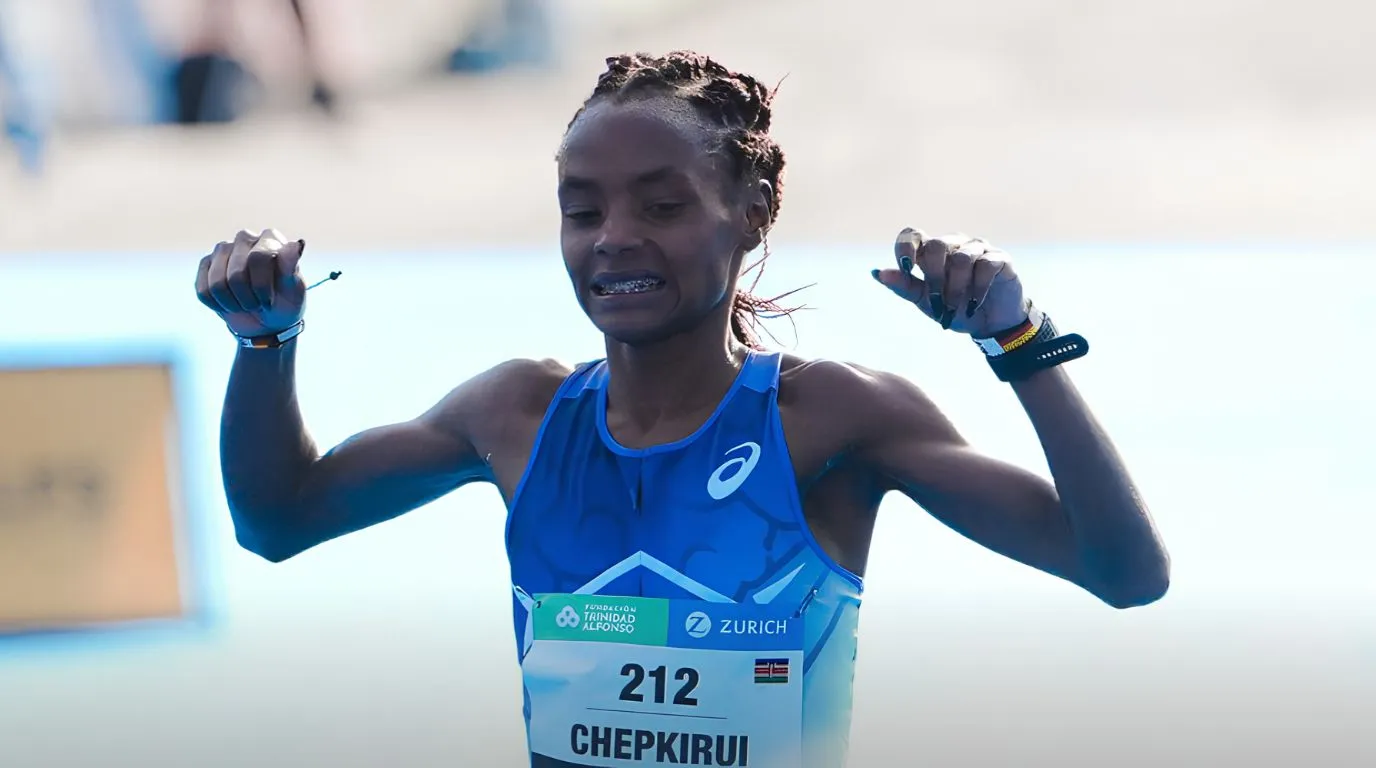
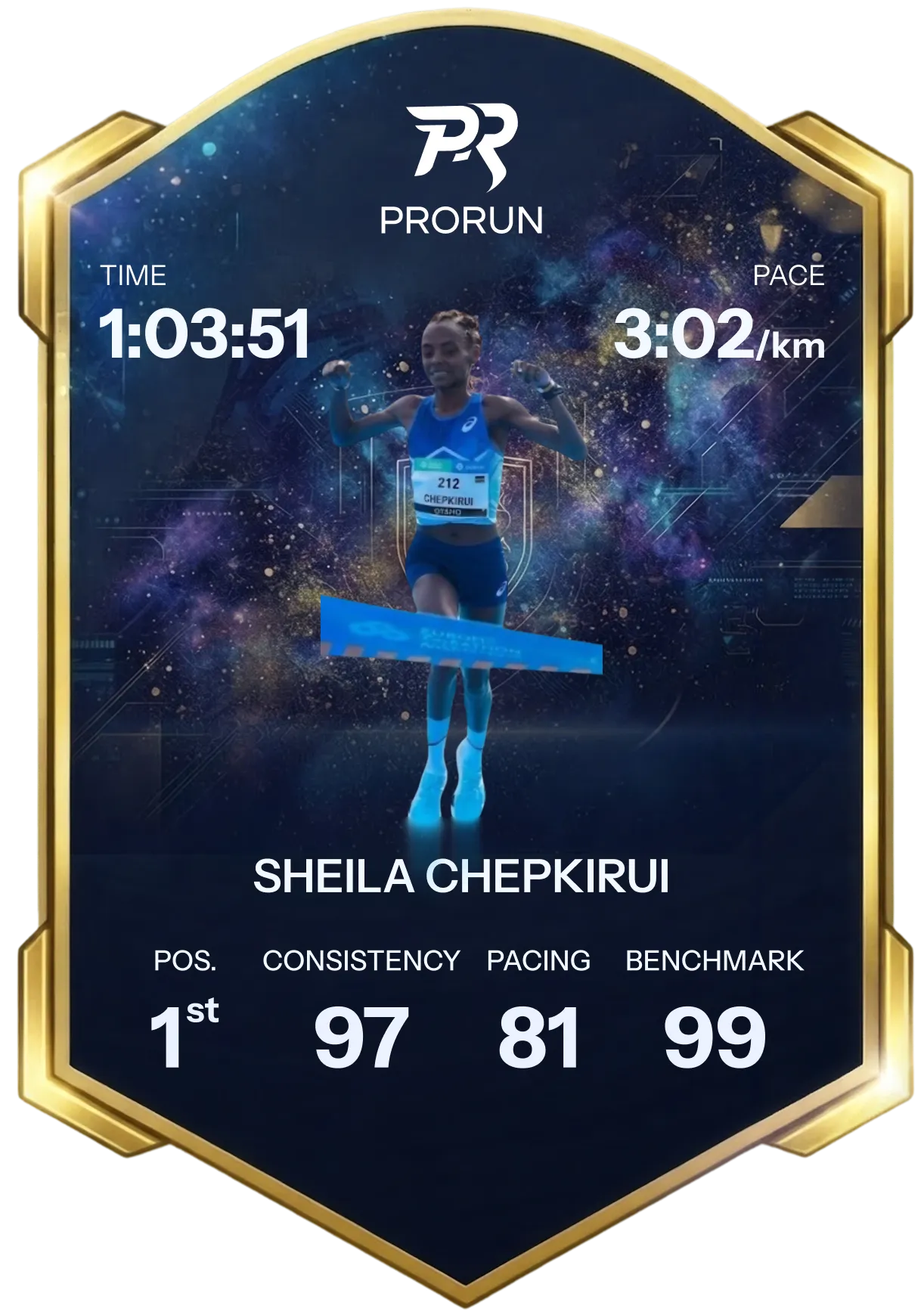
Sheila Chepkirui delivered a landmark performance at the 2026 Valencia Half Marathon, winning in 1h 03m 51s and setting a NEW PERSONAL BEST. Her 45-second improvement was only part of the story: the Kenyan champion produced the world-leading half-marathon time of 2026, moved into a tie for fifth on the all-time world list, and prevailed in a breathless sprint finish against Diana Wanza by just one second. On a clear, fast day in Valencia, Chepkirui combined exceptional pace control with the competitive nerve required to win one of the deepest women’s road races ever assembled.
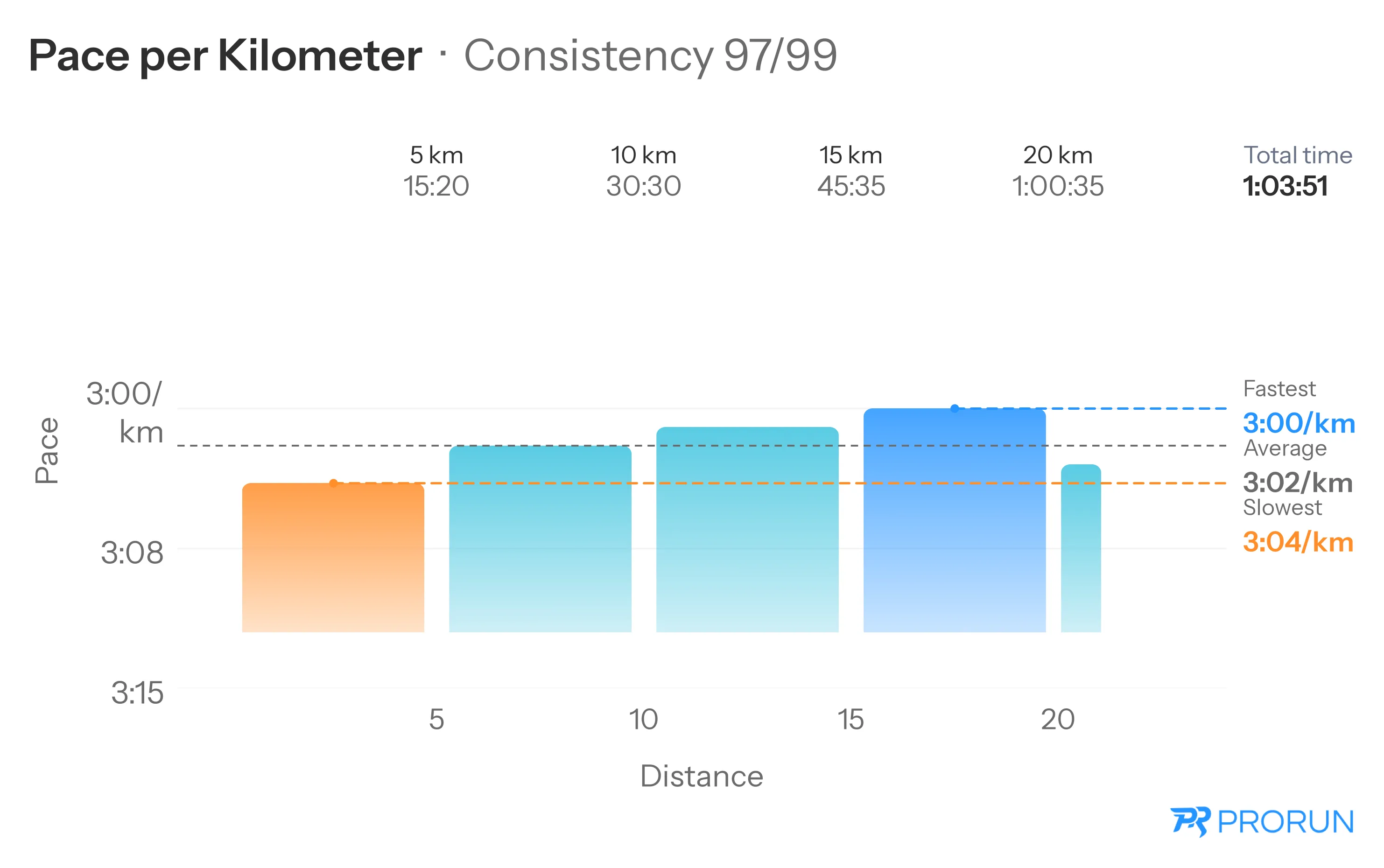
Consistency — 97/99 (excellent)
A score of 97/99 reflects an extraordinarily stable performance, even by elite standards. Chepkirui’s average pace across the opening and closing portions differed by only one second per kilometre—a sign that the intensity remained controlled while the race around her changed dramatically.
That stability was especially significant because this was not a simple solo time trial. The leading pack remained tightly grouped through 10 km before the pacemakers increased the pressure around 15 km. Chepkirui responded without disrupting her rhythm, passing that checkpoint with the leading Kenyan trio in 45:31 and helping create a 24–25-second advantage over the chase group. Her consistency therefore represented more than uniform speed: it showed an ability to absorb tactical surges without wasting energy or losing mechanical control.
By 20 km, only Wanza could remain alongside her. Chepkirui’s metronomic execution had preserved enough strength for the decisive final move, demonstrating how disciplined pacing can become a tactical weapon.
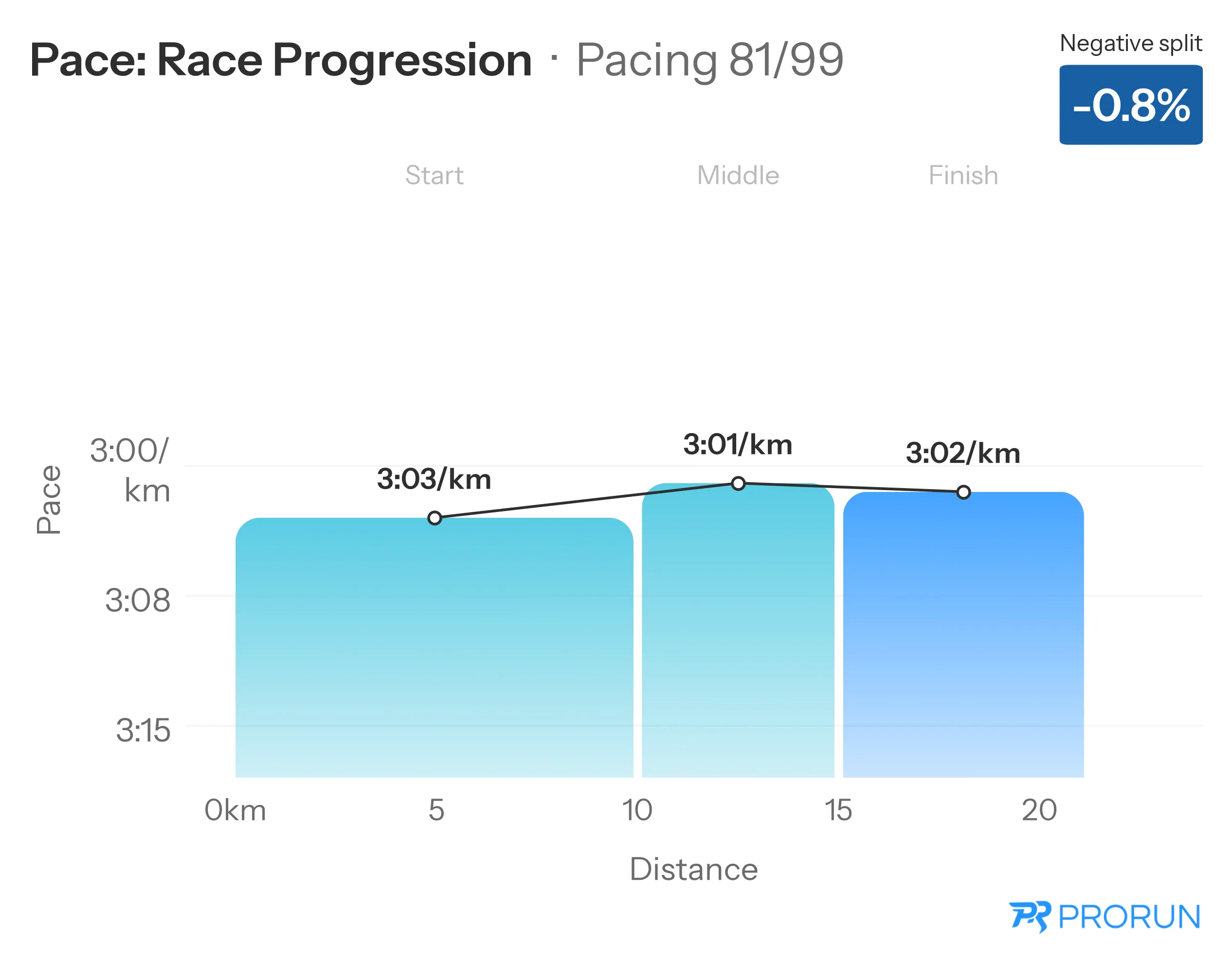
Pacing — 81/99 (flat to moderate negative split)
Chepkirui averaged 3:04 min/km over the first roughly 35% of the race and 3:03 min/km over the final roughly 35%. In practical terms, she became about 0.5% faster late in the contest rather than fading—a modest negative split that explains the strong 81/99 pacing score.
The numerical difference may look small, but at this level one second per kilometre is meaningful. It came after sustained running near the limits of world-class half-marathon performance and while direct rivals were being eliminated. Between 15 km and 20 km, Daisilah Jerono lost contact, leaving Chepkirui and Wanza together at the front in 1:00:30. Maintaining—and slightly increasing—pace under that pressure was evidence of excellent endurance management.
The final kilometre then became a duel rather than a pacing exercise. Chepkirui launched the decisive attack, Wanza answered, and the winner protected a one-second margin to the line. The data captures a controlled negative split; the race footage would have shown the competitive aggression behind it.
Benchmark — 99/99 (at or near lifetime best)
The benchmark result is unequivocal: NEW PERSONAL BEST. Chepkirui’s 1h 03m 51s improved her previous lifetime best of 1h 04m 36s, set at the 2022 Ras Al Khaimah Half Marathon, by 45 seconds. For an established elite athlete, removing three-quarters of a minute from an already world-class mark represents a major career breakthrough rather than an incremental gain.
The broader historical context makes the achievement even more striking:
- It was the fastest women’s half marathon of 2026, confirming Chepkirui as the season’s global standard-setter.
- It lifted her to joint fifth-fastest in history, placing the performance among the discipline’s defining results.
- It led the first women’s half marathon in which six athletes broke 1h 05m, making victory especially valuable in a field of unprecedented depth.
This was also Chepkirui’s season-opening—and only current-season—race at the distance, so there is no earlier seasonal mark for comparison. Instead, she established an exceptional benchmark at the first opportunity.
Taken together, the three dimensions describe a complete championship-quality road performance: elite consistency, a controlled late acceleration, and a lifetime-best result achieved under direct competitive pressure. Chepkirui’s greatest strengths were her economical response to the 15 km selection and her ability to finish faster after an uncompromising opening. With Wanza only one second behind, there was virtually no margin for tactical error, yet Chepkirui found precisely enough in the closing kilometre. Valencia witnessed not merely a victory, but a career-defining performance worthy of the fastest era in women’s distance running.